Perspectives on Climate Change

Dr. Alireza Nurbakhsh

< Back to Discourse Library

Human beings are prone to all kinds of calamities. Some, such as disease and our eventual death, are inevitable. Others, such as war, are created by our own doings. Until very recently no one believed that we have brought yet another disaster upon ourselves by producing too much carbon-based emissions. Now it seems there is a consensus—at least among the majority of scientists—that human activity since the industrial revolution has caused the overheating of our planet, with potentially disastrous consequences.

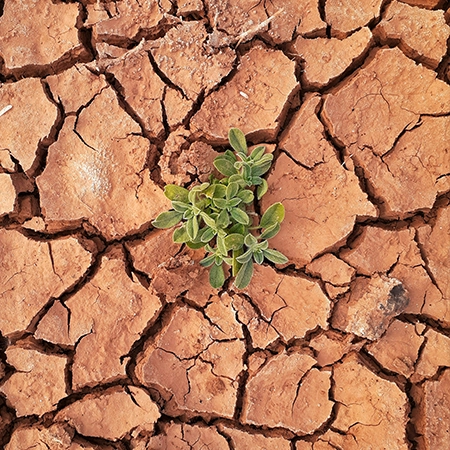
As recently as March 31, 2014, the Intergovernmental Panel on Climate Change (IPCC), a United Nations group that monitors climate change, has concluded that the oceans are rising at an alarming rate due to the melting of glaciers and are becoming more acidic due to the absorption of carbon dioxide emitted by power plants, factories and motor vehicles. In some parts of the world there is excessive flooding, while in other parts substantial shortages of rain and snowfall have caused long-term drought and brought water supplies to near crisis levels. As a result, the world's food supply is at particular risk. The chairman of the IPCC, Rajendra K. Pachauri, has concluded, "Nobody on this planet is going to be untouched by the impact of climate change."

Whether this man-made calamity will result in our own eventual demise as a species on this planet remains to be seen. What is predicted with some certainty is that life in its present form on this planet will not be sustainable if we do not drastically reduce our carbon emissions.

While there is a growing consensus that we need to reduce emissions, there are differing views as to how best to accomplish this. Some scientists and other experts are confident that technology and science will lead governments and private industry to counteract global warming. Others, doubtful that a scientific solution will emerge, or that nations or communities will ever be willing to make the required sacrifices, advocate that change will only come through the efforts of individuals, and that either a more ethical or a more spiritual stance is needed to face the crisis.

Without wishing to make a claim as to what is possible in the realm of science and technology or in the context of the global community of nation states, I want to explore the difference between viewing climate change from an ethical perspective and viewing it from a spiritual perspective.

The Ethical Perspective

"Right is right, and wrong is wrong, and a body ain't got no business doing wrong when he ain't ignorant and knows better."
Mark Twain, The Adventures of Huckleberry Finn

The ethical point of view considers what man has done to bring about climate change and global warming to be irresponsible and morally wrong. It recommends that we adopt a more compassionate approach both to the environment and to others, that we be less greedy, consume less, share more with the less fortunate and be more in tune with nature and all creatures. Someone who takes the ethical stance is concerned as much with his or her own behavior as with the behavior of others. Each person should be an example of what it means to act more compassionately and should demonstrate the value of being less selfish and sharing more with others. In the context of looming environmental change, we need to help each other to see, and to teach our children, that in the end it is beneficial for everyone to take an ethical stance and to work together to face this crisis in a spirit of compassion, community and cooperation. This would include requiring our governments to pass environment-friendly laws to limit and monitor our behavior and the activities of our business institutions regarding the emission of carbon dioxide and the use of our natural resources.

The ethical stance is based on what seems to us to be right and wrong in the context of the preservation of life on this planet. The justification of our actions is derived from this single goal. It implies that the responsibility for effecting any change in the world rests squarely on our shoulders.

The Spiritual Perspective

"For there is nothing either good or bad, but thinking makes it so."
—William Shakespeare, Hamlet

The spiritual stance by contrast is not concerned with what is right or wrong; it does not strive to achieve any particular outcome. Based on the idea that there is nothing "wrong" with the world as it is, the spiritual perspective leads us to accept things as they are and to view what we habitually think of as being right or wrong as aspects of one single reality. One who takes the spiritual stance submits to his or her condition in the world and sees the world as perfect the way it is. If there is any imperfection, it lies with the individual who sees the world imperfectly.

The spiritual stance shifts the wrongness that one sees in the world to himself or herself, leading one to come face to face with his or her imperfections and to desire that change come from within. The spiritual stance, therefore, is not a passive position; it does not advocate doing nothing. It demands inner change, a change in ourselves, not others. When Gandhi said, "Be the change you want to see in the world," he was speaking from the spiritual stance. When Jesus said, "The kingdom of God is not coming with signs to be observed; nor shall they say, 'Lo here it is! Lo there!' for behold, the kingdom of God is within you" (Luke 17:21), he was teaching us to adopt a spiritual stance. And Rumi too was speaking from a spiritual perspective when he wrote:

O you who are seeking God, you are God, Give up your search, God is within you.
If you want to see the Beloved face to face,
Burnish the rust on your heart and make it shine to reflect the divine.

One adopts the spiritual stance because one is drawn to it; the spiritual stance does not (and does not attempt to) provide us with a rational explanation or justification for natural phenomena or human behavior. If, for example, one responds to a man-made disaster or other horrific event by saying, "it is God's will," that statement should not be understood to mean, "there is a Being Who has made us in such a way as to bring calamity upon ourselves, but we do not understand His reasons." Such a view strikes us as absurd. Instead, the statement is best understood as an expression of acceptance of the world as it is from the spiritual point of view. It means that what appear to us as horrific events are as much part of the world as those that appear to us as pleasant, and that both are aspects of a totality to which one must surrender.

We do not adopt the spiritual stance to explain the world; we are driven to it because of our experience of the transcendent. This is the experience of Oneness when all distinctions—whether good or bad, right or wrong, animate or inanimate—disappear.

Rabindranath Tagore, the early twentieth-century Indian spiritual poet, had such an experience when he wrote in his Gitanjali:

The same stream of life that runs through my veins night and day runs through the world and dances in rhythmic measures.
It is the same life that shoots in joy through the dust of the earth in numberless blades of grass and breaks into tumultuous waves of leaves and flowers.
It is the same life that is rocked in the ocean-cradle of birth and of death, in ebb and in flow.

It is the same experience that Hatef Esfahani, the eighteenth-century Persian Sufi, describes in his poem:

The fire-worshiping cupbearer with his fiery hand Poured down burning wine in my cup.
When I drank, my reason and consciousness vanished,
The wine burned away both my faith and unbelief.
I collapsed in drunkenness and,
In an indescribable language
I heard this discourse from every part of my body,
As well as my veins and blood,
There is only One, nothing but Him,
He is the One, no one but Him.

It is therefore natural for one who experiences the Oneness of Being to take the spiritual stance. Since there is nothing wrong with the world, if we see any wrong, it lies with our own perception. The spiritual stance is not a rational point of view; it neither explains anything nor prescribes what is right action in the world. The experience of Oneness transcends ethical distinctions, thereby preventing us from seeing the world in terms of right and wrong.

The spiritual stance differs from the ethical stance in yet another respect. It is not concerned with the behavior of others. One who adopts the spiritual stance does not pass judgment on others because he or she considers all human beings to be equally part of the One Reality.

Taking the spiritual stance is an involuntary process that comes about by gradual transformation of self and the experience of Oneness. By contrast, the ethical stance is a voluntary process that can be adopted by anyone. It stands to reason that in the context of finding a solution to the problem of climate change, the ethical stance is the better option as it can be "understood" by everyone and it is easier to implement through collective action in the world.

This is not to say that spiritual perspectives are ineffective in the face of such momentous problems as global warming. Implicit in the spiritual point of view is the idea that through self-transformation and the experience, at least to some extent, that all life is part of a single whole, a human being can become free from the acquisitive, selfish, aggressive and careless motivation and behavior that give rise to calamities such as global warming. And if more and more human beings were to adopt a spiritual stance one can imagine that our collective behavior would change for the better, reducing the risk that, due to our failure to sense the existence of God in ourselves, we will continue to impose change on the environment to the detriment of both ourselves and all other life forms on this planet.
Human beings are prone to all kinds of calamities. Some, such as disease and our eventual death, are inevitable. Others, such as war, are created by our own doings. Until very recently no one believed that we have brought yet another disaster upon ourselves by producing too much carbon-based emissions. Now it seems there is a consensus—at least among the majority of scientists—that human activity since the industrial revolution has caused the overheating of our planet, with potentially disastrous consequences.

As recently as March 31, 2014, the Intergovernmental Panel on Climate Change (IPCC), a United Nations group that monitors climate change, has concluded that the oceans are rising at an alarming rate due to the melting of glaciers and are becoming more acidic due to the absorption of carbon dioxide emitted by power plants, factories and motor vehicles. In some parts of the world there is excessive flooding, while in other parts substantial shortages of rain and snowfall have caused long-term drought and brought water supplies to near crisis levels. As a result, the world's food supply is at particular risk. The chairman of the IPCC, Rajendra K. Pachauri, has concluded, "Nobody on this planet is going to be untouched by the impact of climate change."

Whether this man-made calamity will result in our own eventual demise as a species on this planet remains to be seen. What is predicted with some certainty is that life in its present form on this planet will not be sustainable if we do not drastically reduce our carbon emissions.

While there is a growing consensus that we need to reduce emissions, there are differing views as to how best to accomplish this. Some scientists and other experts are confident that technology and science will lead governments and private industry to counteract global warming. Others, doubtful that a scientific solution will emerge, or that nations or communities will ever be willing to make the required sacrifices, advocate that change will only come through the efforts of individuals, and that either a more ethical or a more spiritual stance is needed to face the crisis.

Without wishing to make a claim as to what is possible in the realm of science and technology or in the context of the global community of nation states, I want to explore the difference between viewing climate change from an ethical perspective and viewing it from a spiritual perspective.

The Ethical Perspective

"Right is right, and wrong is wrong, and a body ain't got no business doing wrong when he ain't ignorant and knows better."
Mark Twain, The Adventures of Huckleberry Finn

The ethical point of view considers what man has done to bring about climate change and global warming to be irresponsible and morally wrong. It recommends that we adopt a more compassionate approach both to the environment and to others, that we be less greedy, consume less, share more with the less fortunate and be more in tune with nature and all creatures. Someone who takes the ethical stance is concerned as much with his or her own behavior as with the behavior of others. Each person should be an example of what it means to act more compassionately and should demonstrate the value of being less selfish and sharing more with others. In the context of looming environmental change, we need to help each other to see, and to teach our children, that in the end it is beneficial for everyone to take an ethical stance and to work together to face this crisis in a spirit of compassion, community and cooperation. This would include requiring our governments to pass environment-friendly laws to limit and monitor our behavior and the activities of our business institutions regarding the emission of carbon dioxide and the use of our natural resources.

The ethical stance is based on what seems to us to be right and wrong in the context of the preservation of life on this planet. The justification of our actions is derived from this single goal. It implies that the responsibility for effecting any change in the world rests squarely on our shoulders.

The Spiritual Perspective

"For there is nothing either good or bad, but thinking makes it so."
—William Shakespeare, Hamlet

The spiritual stance by contrast is not concerned with what is right or wrong; it does not strive to achieve any particular outcome. Based on the idea that there is nothing "wrong" with the world as it is, the spiritual perspective leads us to accept things as they are and to view what we habitually think of as being right or wrong as aspects of one single reality. One who takes the spiritual stance submits to his or her condition in the world and sees the world as perfect the way it is. If there is any imperfection, it lies with the individual who sees the world imperfectly.

The spiritual stance shifts the wrongness that one sees in the world to himself or herself, leading one to come face to face with his or her imperfections and to desire that change come from within. The spiritual stance, therefore, is not a passive position; it does not advocate doing nothing. It demands inner change, a change in ourselves, not others. When Gandhi said, "Be the change you want to see in the world," he was speaking from the spiritual stance. When Jesus said, "The kingdom of God is not coming with signs to be observed; nor shall they say, 'Lo here it is! Lo there!' for behold, the kingdom of God is within you" (Luke 17:21), he was teaching us to adopt a spiritual stance. And Rumi too was speaking from a spiritual perspective when he wrote:

O you who are seeking God, you are God, Give up your search, God is within you.
If you want to see the Beloved face to face,
Burnish the rust on your heart and make it shine to reflect the divine.

One adopts the spiritual stance because one is drawn to it; the spiritual stance does not (and does not attempt to) provide us with a rational explanation or justification for natural phenomena or human behavior. If, for example, one responds to a man-made disaster or other horrific event by saying, "it is God's will," that statement should not be understood to mean, "there is a Being Who has made us in such a way as to bring calamity upon ourselves, but we do not understand His reasons." Such a view strikes us as absurd. Instead, the statement is best understood as an expression of acceptance of the world as it is from the spiritual point of view. It means that what appear to us as horrific events are as much part of the world as those that appear to us as pleasant, and that both are aspects of a totality to which one must surrender.

We do not adopt the spiritual stance to explain the world; we are driven to it because of our experience of the transcendent. This is the experience of Oneness when all distinctions—whether good or bad, right or wrong, animate or inanimate—disappear.

Rabindranath Tagore, the early twentieth-century Indian spiritual poet, had such an experience when he wrote in his Gitanjali:

The same stream of life that runs through my veins night and day runs through the world and dances in rhythmic measures.
It is the same life that shoots in joy through the dust of the earth in numberless blades of grass and breaks into tumultuous waves of leaves and flowers.
It is the same life that is rocked in the ocean-cradle of birth and of death, in ebb and in flow.

It is the same experience that Hatef Esfahani, the eighteenth-century Persian Sufi, describes in his poem:

The fire-worshiping cupbearer with his fiery hand Poured down burning wine in my cup.
When I drank, my reason and consciousness vanished,
The wine burned away both my faith and unbelief.
I collapsed in drunkenness and,
In an indescribable language
I heard this discourse from every part of my body,
As well as my veins and blood,
There is only One, nothing but Him,
He is the One, no one but Him.

It is therefore natural for one who experiences the Oneness of Being to take the spiritual stance. Since there is nothing wrong with the world, if we see any wrong, it lies with our own perception. The spiritual stance is not a rational point of view; it neither explains anything nor prescribes what is right action in the world. The experience of Oneness transcends ethical distinctions, thereby preventing us from seeing the world in terms of right and wrong.

The spiritual stance differs from the ethical stance in yet another respect. It is not concerned with the behavior of others. One who adopts the spiritual stance does not pass judgment on others because he or she considers all human beings to be equally part of the One Reality.

Taking the spiritual stance is an involuntary process that comes about by gradual transformation of self and the experience of Oneness. By contrast, the ethical stance is a voluntary process that can be adopted by anyone. It stands to reason that in the context of finding a solution to the problem of climate change, the ethical stance is the better option as it can be "understood" by everyone and it is easier to implement through collective action in the world.

This is not to say that spiritual perspectives are ineffective in the face of such momentous problems as global warming. Implicit in the spiritual point of view is the idea that through self-transformation and the experience, at least to some extent, that all life is part of a single whole, a human being can become free from the acquisitive, selfish, aggressive and careless motivation and behavior that give rise to calamities such as global warming. And if more and more human beings were to adopt a spiritual stance one can imagine that our collective behavior would change for the better, reducing the risk that, due to our failure to sense the existence of God in ourselves, we will continue to impose change on the environment to the detriment of both ourselves and all other life forms on this planet.

< Previous DiscourseNext Discourse >